

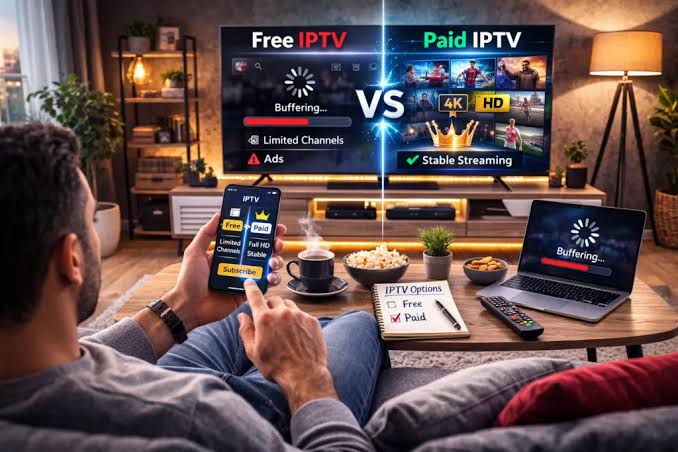
You’re about to subscribe to an IPTV service. The website promises thousands of live TV channels, sports, movies, and even 4K streaming for a surprisingly cheap monthly price. Sounds great, right?
Then one question pops into your head: What if the service is bad?
Nobody wants to pay for something that buffers every few minutes or suddenly disappears after a week. That’s exactly why many people look for an iptv free trial before making a decision.
But are these trials actually useful? Are they safe? And how do you tell the difference between a reliable provider and one that simply looks good on the homepage?
Let’s break it down in a practical, honest way.
Quick Answer: What Is an IPTV Free Trial?
An IPTV free trial is a temporary test period offered by an IPTV provider so users can check the streaming service before paying for a subscription.
Usually, the trial lasts anywhere from a few hours to a few days. During this period, users can test:
- Live TV channels
- Sports streaming quality
- Video-on-demand content (movies and series)
- Device compatibility
- Buffering speed and reliability
- User interface and navigation
Think of it like test-driving a car. You wouldn’t buy one without seeing how it performs first.
What Is IPTV?
Before going deeper, let’s quickly clear something up.
IPTV stands for Internet Protocol Television. Instead of receiving television through cable or satellite, IPTV delivers content over the internet.
In simple words, your TV content streams online.
This means you can watch:
- Live television
- Sports events
- Movies
- TV series
- International channels
- On-demand content
People usually access IPTV through smart TVs, streaming devices, smartphones, tablets, or apps such as IPTV players.
Some well-known legal streaming services technically use IPTV technology too. The difference comes down to content licensing and how the provider distributes media.
Why Do IPTV Providers Offer Free Trials?
Honestly, trust is a huge issue in this industry.
There are many IPTV providers online, and not all of them are reliable. Some promise “20,000 channels” but struggle to stream a football match without buffering.
A trial period gives potential customers confidence.
Providers know users want answers to questions like:
- Does the stream lag?
- Are sports channels actually working?
- Is the picture quality decent?
- Can I use it on my Firestick or Android TV?
- Does customer support even respond?
Without testing, you’re basically gambling with your money.
How an IPTV Trial Usually Works
The process is often pretty simple.
Step 1: Visit the Provider’s Website
Most IPTV services have a page offering trial access. Some are completely free, while others charge a tiny fee.
That small payment can sometimes reduce fake signups or spam users.
Step 2: Receive Login Credentials
After registration, you may get:
- Username and password
- M3U playlist URL
- Xtream Codes login
- App installation details
Some providers send this information instantly. Others take a few hours.
Step 3: Add the Service to an IPTV Player
You’ll typically use apps like:
- IPTV Smarters
- TiviMate
- XCIPTV
- Smart IPTV
- OTT Navigator
Once logged in, channels and content become available.
Step 4: Test Everything Properly
This is where many users make mistakes.
They test only one channel and think, “Looks fine.”
No. You should actually stress-test the service.
Try:
- Sports channels during peak hours
- HD and 4K streams
- Local channels
- Movies and TV shows
- Multiple devices if supported
A provider may work perfectly at 10 AM but struggle badly during live sports events.
That difference matters.
Features You Should Check During a Trial
Not every IPTV service is equal.
Some feel polished and smooth. Others feel like they were thrown together overnight.
Here’s what to evaluate.
1. Streaming Quality
Picture quality matters more than fancy promises.
Look for:
- HD quality consistency
- Minimal buffering
- Stable streams
- Fast loading time
A lot of providers advertise 4K but barely maintain HD quality.
2. Channel Selection
Ask yourself:
Does this actually include what I watch?
People often get distracted by giant channel numbers.
Honestly, nobody watches 18,000 channels.
Instead, check:
- Sports channels
- Regional content
- Entertainment channels
- News networks
- Kids programming
Quality beats quantity every time.
3. Device Compatibility
A good IPTV service should work smoothly across devices.
Common supported platforms include:
- Smart TVs
- Android TV boxes
- Firestick
- Smartphones
- Tablets
- Windows or Mac devices
Compatibility problems are surprisingly common.
One user I talked to tested an IPTV provider that looked perfect on Android but kept crashing on Firestick. A free test saved him from paying for frustration.
4. Electronic Program Guide (EPG)
A proper TV guide makes a huge difference.
Without it, finding channels feels messy.
A clean EPG helps users:
- Browse schedules
- Find live events faster
- Navigate channels easily
Small detail, big quality signal.
5. Customer Support
This gets ignored way too often.
Try messaging support during the trial.
Ask a simple setup question.
If they disappear before payment, imagine what happens after payment.
Not a great sign.
Pros of Trying IPTV Before Paying
Helps You Avoid Scams
This industry unfortunately attracts fake providers.
Some websites look professional but disappear after collecting subscriptions.
Testing first reduces risk.
Lets You Check Streaming Stability
Nothing ruins streaming like endless buffering.
Especially during live sports.
A proper test gives you real-world performance data.
Saves Money
Subscriptions can add up over time.
Trying before buying prevents wasting money on poor services.
Helps Compare Multiple Providers
Sometimes the first option isn’t the best.
You may test three providers and discover one clearly performs better.
That comparison matters.
Cons and Limitations
Let’s be realistic here. Free trials are not perfect.
Some Trials Are Too Short
A 2-hour trial sounds useful until you realize it ends before peak viewing hours.
That makes testing difficult.
Limited Content Access
Some providers restrict premium channels during the trial.
So what you see may not reflect the actual paid version.
Performance Can Be Misleading
A service might run perfectly during low traffic but slow down later.
That’s why testing during busy times matters.
Aggressive Marketing
Some providers push hard after signup.
Expect emails, messages, or sales pressure from certain services.
Are IPTV Services Safe?
This question deserves a careful answer.
Safety depends heavily on the provider.
Some IPTV services are transparent, professionally managed, and focused on licensed content.
Others operate in gray areas or may not clearly explain licensing.
Before signing up, check:
- Website transparency
- Privacy policy
- Customer support availability
- Payment security
- Online reviews
Be cautious if a provider:
- Accepts only cryptocurrency
- Has no support contact
- Makes unrealistic promises
- Hides ownership details
That doesn’t automatically mean it’s unsafe, but it should raise questions.
Is IPTV Legal?
This part confuses many people.
IPTV technology itself is completely legal.
The issue is content licensing.
Licensed streaming providers that have permission to distribute content are legal.
Unverified services offering premium sports, movies, and premium TV at suspiciously low prices may operate without proper licensing.
As a viewer, laws vary depending on country and region.
If legality matters to you, stick with providers that clearly explain licensing and content rights.
Common Problems People Face
Even decent IPTV providers can have issues.
Buffering During Peak Hours
The biggest complaint.
Especially during major sports events.
Heavy traffic can overload weaker servers.
Broken Channels
Not every listed channel always works.
This is surprisingly common.
App Compatibility Problems
Sometimes the service works better on one device than another.
Slow Customer Support
A delayed response becomes annoying fast when streams stop working.
IPTV vs Traditional Cable
Many people switch because cable feels expensive and limited.
IPTV Pros
- More flexibility
- Large content libraries
- Watch on multiple devices
- Lower monthly cost in some cases
Cable Pros
- Usually more stable
- Better customer accountability
- Clear legal licensing
For casual viewers, IPTV can feel more flexible.
For people who want maximum reliability, traditional providers still have advantages.
How to Choose the Right IPTV Trial
Here’s a simple checklist.
Ask yourself:
Does it buffer during sports?
Are channels loading quickly?
Is the interface clean?
Does support respond?
Can I watch what I actually care about?
That last question matters most.
Don’t chase huge channel numbers.
Find what genuinely fits your viewing habits.
My Practical Opinion
If you’re curious about IPTV, testing before paying simply makes sense.
I’ve seen people subscribe immediately because a website looked convincing, only to regret it within days.
The smarter move?
Treat the trial like research.
Open the channels you actually watch.
Test during busy hours.
Try different devices.
Check support.
A provider that performs well consistently during testing usually gives a better long-term experience.
Still, keep expectations realistic.
No service is perfect. Even premium streaming platforms occasionally buffer or have outages.
The goal is finding something stable enough for your needs.
Final Verdict
An IPTV trial can be genuinely useful if approached the right way.
It helps users evaluate streaming quality, channel access, usability, and reliability before spending money.
At the same time, not every provider offers a meaningful experience. Some trials are too short, some limit access, and some simply overpromise.
The best approach is simple: test carefully, compare options, and pay attention to performance during real viewing situations.
If a service struggles during the trial, chances are the paid version won’t magically become better.
A little patience upfront can save a lot of frustration later.
FAQs
Q: What is an IPTV free trial?
A: It is a temporary test period that allows users to try an IPTV service before buying a subscription. Users can test channels, streaming quality, and compatibility.
Q: Are IPTV free trials actually free?
A: Some are completely free, while others charge a small amount to reduce spam or fake accounts.
Q: How long do IPTV trials last?
A: It depends on the provider. Some last a few hours, while others may run for one to three days.
Q: Can I use IPTV on a smart TV?
A: Yes, many IPTV services support smart TVs, streaming sticks, Android devices, smartphones, and tablets.
Q: Is IPTV legal?
A: IPTV technology itself is legal. Legality depends on whether the provider has rights to distribute the content being streamed.
Q: What should I test during a trial?
A: Check streaming quality, buffering, sports performance, channel availability, app compatibility, and customer support responsiveness.
Q: Is a free trial enough to judge an IPTV service?
A: Usually yes, but longer trials give a better picture, especially during busy streaming hours.
