
I’ll be honest with you — when I first started digging into “ThePirateOrg,” I expected a quick, straightforward answer. What I found instead was a tangle of mirror sites, proxy domains, and rebranded clones, all loosely connected to the much bigger and more controversial torrent ecosystem built around The Pirate Bay. If you’ve landed here because a friend mentioned the name, or you stumbled across it while looking for free movies or software, you’re probably wondering the same things most people do: is this thing even legit, and will using it get me in trouble?
Let’s walk through it properly.
Quick Answer
ThePirateOrg refers to a website operating in the same space as The Pirate Bay — a torrent indexing platform (or one of its many mirrors/proxies) that lets users search for and download magnet links to movies, music, software, games, and other digital files. Like its parent network, it’s free to use, doesn’t require an account for basic browsing, and earns money through ads. The catch is that most of the content shared through these networks is copyrighted, downloading it is illegal in many countries, and the sites themselves are notorious for aggressive advertising and occasional malware-laced pop-ups. If you choose to use a site like this, a VPN and an ad blocker aren’t optional extras — they’re basic self-protection.
What Is ThePirateOrg?
Names like “ThePirateOrg” almost always sit somewhere in the orbit of The Pirate Bay (TPB), one of the oldest and most well-known torrent indexes on the internet, originally launched back in 2003 by a Swedish group. Over the years, TPB has been raided, blocked by ISPs in dozens of countries, and forced to bounce between domains more times than anyone can count. That constant churn created an entire side industry of mirror sites, proxies, and “alternative” domains — some run by genuine volunteers trying to keep access alive, others run by opportunists looking to slap ads on a popular brand name.
ThePirateOrg fits that mold. It’s not an official Pirate Bay property in any verifiable sense — there’s no clear ownership information, no transparent “about us” page with real names attached (which, to be fair, is the norm for almost every site in this space), and the domain itself doesn’t show up in any official Pirate Bay communications. What it functions as, practically speaking, is a searchable index or proxy that points users toward torrent files and magnet links for the same kind of content you’d find on TPB itself.
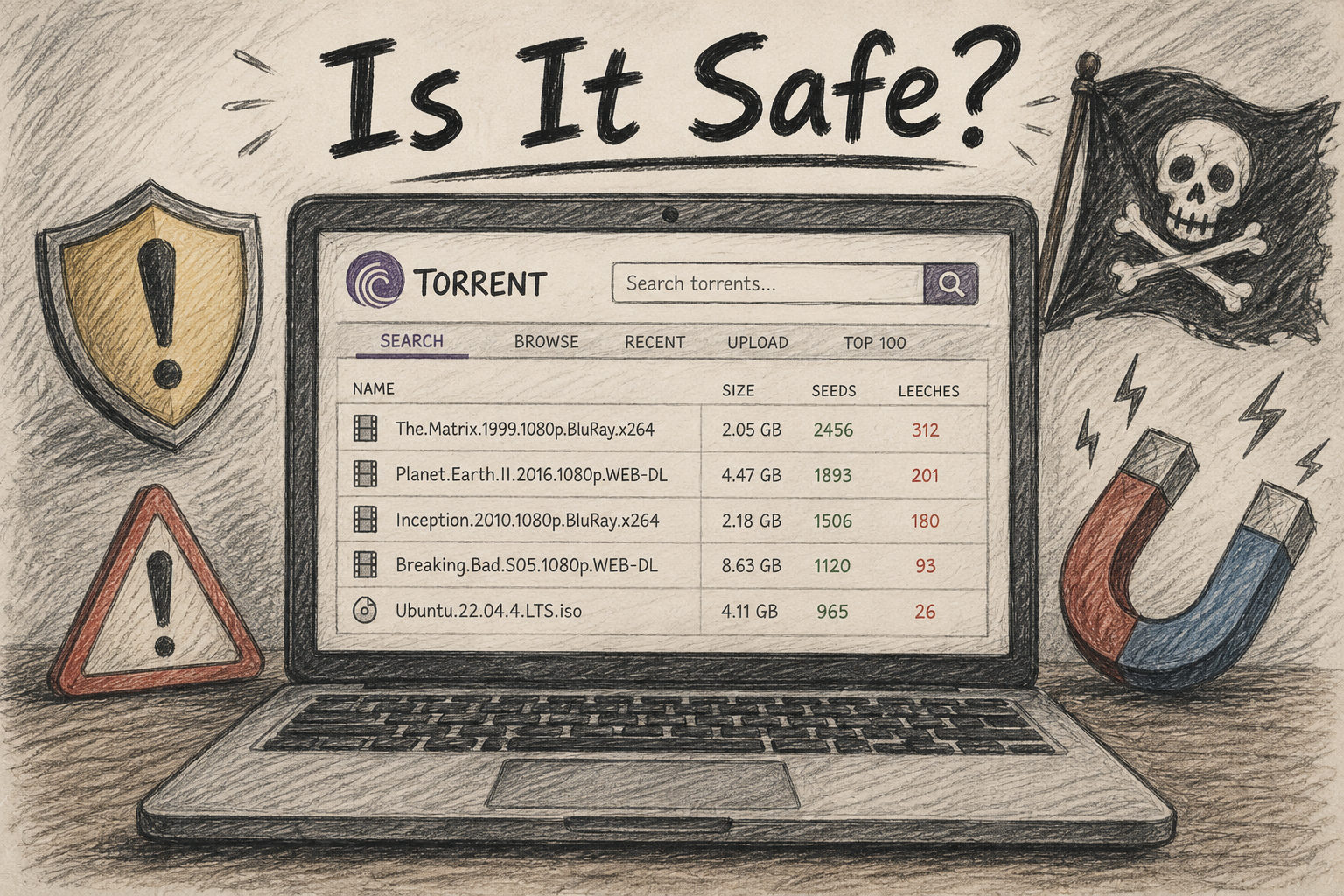
If you’re picturing something like Netflix with a pirate flag logo, that’s not quite it. The interface is usually bare-bones — a search bar, category tabs (movies, TV, games, software, music), and results sorted by seeders and leechers. It’s functional in the way a 2009-era website is functional, not in the way a modern app is.
How It Works
The mechanics here aren’t complicated, and if you’ve used any torrent site before, this will feel familiar.
- You search for a title — a movie, an album, a piece of software, whatever you’re after.
- The site returns a list of results, typically showing file size, number of seeders (people sharing the complete file) and leechers (people currently downloading), upload date, and sometimes a quality or trust rating.
- You click on a result and get either a magnet link or a .torrent file.
- You open that link in a torrent client — uTorrent, qBittorrent, Transmission, whatever you’ve got installed — and the client connects you to other peers who have pieces of that file.
- The download happens peer-to-peer, meaning your device is both downloading from and uploading to other users simultaneously.
The site itself doesn’t host the actual movie or game file. It’s essentially a directory — a phone book for torrents. That distinction matters legally in some jurisdictions, though courts in many countries have ruled that facilitating access to copyrighted material is itself a problem, regardless of where the file physically sits.
Main Features
Here’s what you can generally expect from a site in this category:
- No-login browsing — most searching and link access doesn’t require account creation
- Category-based search — content organized by movies, TV shows, games, applications, music, and sometimes books or “physibles” (3D printable files)
- Seeder/leecher counts — a rough indicator of how fast and reliable a download will be
- User comments — on some pages, where other downloaders flag whether a file is clean, fake, or password-protected
- Magnet link support — letting you skip the .torrent file download step entirely
- Multiple mirror domains — because the main domain frequently gets blocked or seized, you’ll often find a list of “working” alternative URLs
One thing I’ll note from poking around similar sites: the comment sections, when they exist, are honestly one of the more useful features. A file with dozens of comments saying “works fine, no issues” carries more weight than the seeder count alone, especially for software downloads where fake or bundled-malware files are common.
Pros and Cons
Pros:
- Free access to a huge library of content without subscriptions
- Works across most operating systems since it’s just pointing to torrent files
- Community feedback (comments, ratings) can help filter out bad files
- No hard paywalls or mandatory account creation for basic use
Cons:
- Most shared content is copyrighted — downloading it is illegal in many countries and can carry fines or, in rare cases, legal action
- Heavy, often deceptive advertising — fake “download” buttons, redirect chains, and pop-ups are extremely common
- Malware risk — particularly with software and game downloads, where executable files can be bundled with unwanted programs or worse
- Domain instability — the site you used last month might be dead or replaced by a copycat next month
- No customer support, no accountability, no recourse if something goes wrong
- ISP throttling or blocking is common, depending on your country
Real-World Examples and Use Cases
Let’s put this in context with a couple of scenarios, because abstract descriptions only get you so far.
Scenario one: Someone in a country with limited streaming service availability — say, a region where Netflix’s catalog is thin and local options are expensive relative to income — searches for an older TV series that simply isn’t available legally where they live. They land on a site like ThePirateOrg, find the season, and download it via magnet link. Functionally, it works. Legally and ethically, it’s still copyright infringement, even if the “I have no other option” argument feels compelling.
Scenario two: Someone wants a cracked version of paid design software because the subscription cost is steep. They download an executable from a torrent listing on a site like this. The file runs, the software “works” — but six months later their antivirus flags a background process that’s been quietly logging keystrokes. This isn’t a hypothetical scare story; it’s one of the most commonly reported issues with software piracy specifically, because executables are far easier to weaponize than a video file.
I’d be doing you a disservice if I pretended these risks are rare edge cases. They’re documented, repeatedly, by cybersecurity researchers covering torrent ecosystems generally.
Safety, Privacy, and Legitimacy Analysis
This is the part most people actually care about, so let’s be direct.
Is it legitimate? In the sense of “does it function as advertised” — searching and returning torrent links — yes, generally. In the sense of “is it a legally operating, trustworthy business with accountability” — no. There’s no terms of service that means much, no privacy policy worth the paper it’s not printed on, and no one to complain to if something goes wrong.
Is it safe? Safe is relative. Browsing the site itself probably won’t infect your device, but the ad networks these sites rely on are a different story. You’ll likely encounter:
- Fake “Download” buttons that are actually ads
- Pop-ups claiming your device has a virus (it doesn’t — that’s the scam)
- Redirects to sketchy survey or subscription pages
- Occasional cryptojacking scripts that use your CPU to mine cryptocurrency in the background
What about your IP address? When you use a torrent client, your IP is visible to every other peer in that swarm. In several countries, copyright holders actively monitor popular torrent swarms and send infringement notices to ISPs, who then pass warnings (or worse) to subscribers. This is a real, documented practice — not paranoia.
Legal risk depends heavily on where you live. Some countries have strict three-strikes policies for repeat infringement notices. Others have largely decriminalized personal downloading while still prosecuting uploaders/seeders more aggressively. Pakistan, like many countries, doesn’t have a strong enforcement culture around individual downloaders, but that’s not the same as it being legal — it just means enforcement priorities lie elsewhere.
Common Problems and Limitations
A few recurring headaches people report with sites in this category:
- Dead or fake torrents — files with zero seeders that never complete, or files that turn out to be something entirely different from what they claim
- Domain hopping — bookmarking one URL only to find it’s been seized or shut down within weeks
- Comment manipulation — some “verified” or trusted-looking comments are themselves fake, planted to make malicious files look safe
- Inconsistent quality — especially for movies, where “1080p” labels sometimes turn out to be upscaled 480p rips
- No mobile-friendly experience — most of these sites still look and feel like they were designed for a desktop browser circa 2012
Also Explore: Kantime Login Review
How It Compares to Alternatives
If what you’re actually after is content access rather than torrenting specifically, it’s worth weighing the alternatives honestly:
- Legal streaming services (Netflix, regional platforms, YouTube with ads) — cost money but offer reliability, no malware risk, and decent catalogs depending on region
- Other torrent indexes like RuTracker or 1337x — similar legal and safety profile, just different communities and content focus
- Public domain and free legal libraries — Internet Archive, Project Gutenberg, and similar for older content that’s genuinely free and clear
- Freemium software alternatives — for the “I need expensive software” problem specifically, tools like GIMP, DaVinci Resolve, or LibreOffice cover a surprising amount of ground without any legal gray area
None of these are a perfect substitute for “everything, free, instantly,” because that combination genuinely doesn’t exist in a clean, risk-free form.
Practical Opinion
If I’m being straight with you: sites like ThePirateOrg occupy a strange middle ground. They’re popular precisely because they fill real gaps — content that’s regionally unavailable, prohibitively expensive, or simply discontinued and impossible to buy anywhere. That demand isn’t going away, and neither, realistically, are the sites that meet it.
But “popular” and “safe” aren’t the same thing, and “it worked fine for me” isn’t the same as “it’s fine.” The malware risk is concentrated, predictable, and avoidable mostly by not downloading executables from these sources — video and audio files carry far lower risk than .exe or .apk files dressed up as cracked software. If you do use a site like this, treat it the way you’d treat a sketchy back-alley shop: useful sometimes, but you don’t leave your wallet open while you’re in there. A reputable VPN, a solid ad blocker, and an updated antivirus aren’t paranoia — they’re the entry fee.
Final Verdict
ThePirateOrg, as best as it can be characterized, is one of many sites operating in the shadow of The Pirate Bay’s brand — functional as a torrent index, free to access, and carrying the same baseline risks as the rest of that ecosystem: copyright exposure, aggressive ads, and real malware potential on executable downloads. It’s not a scam in the sense of stealing your money directly, but it’s also not a platform with any accountability if things go sideways. Whether it’s “useful” depends entirely on your tolerance for legal gray areas and your willingness to take basic security precautions seriously. For most people, the smarter long-term move is leaning on legal alternatives where they exist, and treating sites like this as a last resort rather than a daily habit.
FAQs
Q: Is ThePirateOrg the same as The Pirate Bay? A: Not officially. It appears to be a mirror, proxy, or similarly-named site operating in the same space as The Pirate Bay, without verified ownership ties to the original.
Q: Do I need a VPN to use it? A: If you’re concerned about your ISP seeing your torrent activity or about region-based blocking, yes — a VPN is the standard precaution most users in this space take.
Q: Can I get in legal trouble for using it? A: Downloading copyrighted content without authorization is illegal in most countries. Enforcement varies widely — some countries send warning notices, others rarely pursue individual downloaders, but “rarely enforced” isn’t the same as “legal.”
Q: Is it safe to download software from sites like this? A: This is where the real risk concentrates. Cracked or pirated software is one of the most common vectors for malware, including keyloggers and trojans. Video and music files carry comparatively lower risk.
Q: Why does the site keep changing domains? A: Sites in this category face frequent takedown requests, ISP blocks, and domain seizures, which is why “working mirrors” lists are a constant feature of this ecosystem.
Q: Are there legal alternatives that offer similar content for free? A: For older or public-domain material, yes — the Internet Archive and similar libraries. For current movies, TV, and software, free legal options are limited, though ad-supported streaming platforms and freemium software tools cover a fair amount of ground.
