

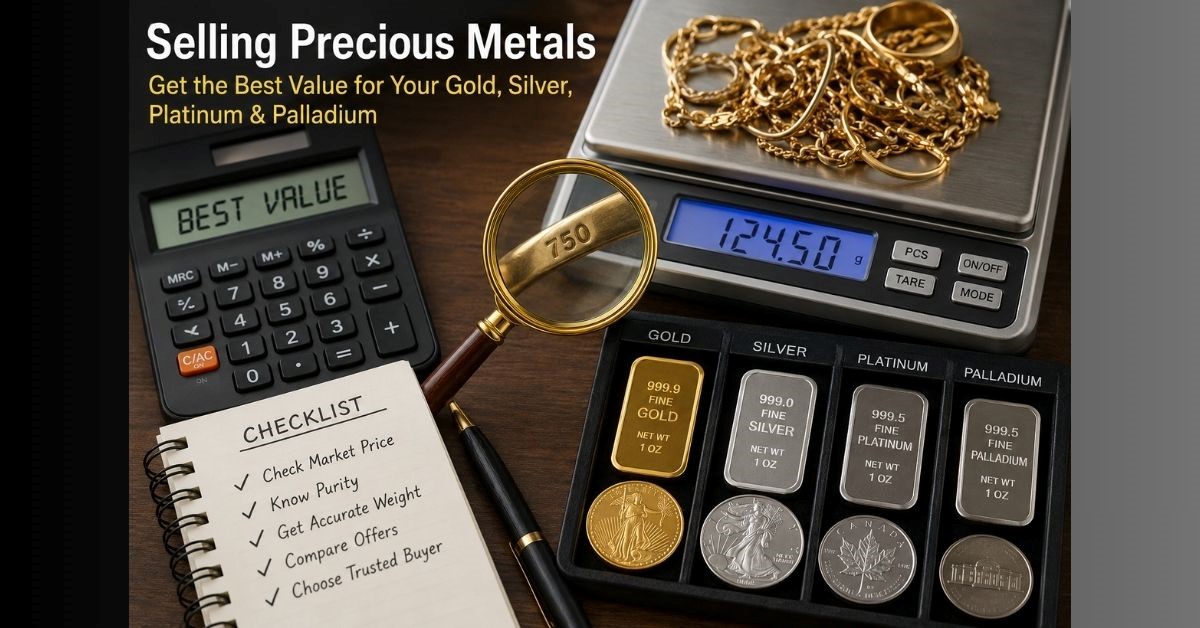
Selling precious metals can be a smart financial decision, whether you’re cashing in on high market prices, decluttering old jewelry, or rebalancing your investment portfolio. Gold, silver, platinum, and palladium all hold significant value, but getting the best price requires more than simply visiting the nearest buyer.
Today’s precious metals market is influenced by global economic trends, industrial demand, inflation, and geopolitical events. Understanding these factors can help you make informed decisions and maximize your return. Choosing a reputable buyer with transparent pricing tools is equally important. Trusted companies like London Gold Centre offer valuable resources, including live pricing calculators that help sellers estimate the value of their precious metals before making a sale.
Precious Metals at a Glance
| Precious Metal | Common Uses | Value Drivers | Best Time to Sell |
| Gold | Jewelry, coins, investment | Inflation, central banks, economic uncertainty | During strong gold markets |
| Silver | Jewelry, electronics, solar panels | Industrial demand and investment | High industrial demand periods |
| Platinum | Automotive, jewelry | Automotive industry and mining supply | Supply shortages |
| Palladium | Catalytic converters, electronics | Automotive demand and limited supply | Strong industrial demand |
Why More People Are Selling Precious Metals
Over the past few years, many individuals have turned unused jewelry, inherited coins, and investment bullion into cash. Precious metals remain one of the world’s most recognized stores of value, making them attractive assets during periods of economic uncertainty.
People commonly sell precious metals for several reasons:
- Taking advantage of high market prices
- Raising emergency funds
- Upgrading investment portfolios
- Selling inherited valuables
- Recycling broken or unwanted jewelry
- Diversifying financial assets
Regardless of your reason, preparation is the key to receiving a fair offer.
The Value of Precious Metals
Many first-time sellers assume their items are worth only their weight. In reality, several factors determine the final value.
1. Metal Purity
Purity is measured differently depending on the metal.
Gold
Gold purity is usually measured in karats.
| Karat | Gold Content |
| 24K | 99.9% |
| 22K | 91.6% |
| 18K | 75% |
| 14K | 58.5% |
| 9K | 37.5% |
Higher purity generally means greater value.
Silver
Silver is commonly marked:
- .999 Fine Silver
- Sterling Silver (.925)
Platinum
Most platinum jewelry contains between 90% and 95% platinum.
Palladium
Palladium jewelry and bullion are often stamped:
- 500
- 950
- 999
2. Current Market Prices
Precious metal prices change throughout the trading day.
Factors affecting prices include:
- Inflation
- Interest rates
- Currency movements
- Mining production
- Industrial demand
- Global political events
- Investor sentiment
Monitoring live market prices before selling can help you choose the right moment.
3. Weight
The heavier the item, the more metal it contains.
Professional buyers use calibrated digital scales to determine accurate weight, usually measured in grams or troy ounces.
4. Condition
For bullion and collectible coins, condition significantly affects value.
Examples include:
- Mint condition coins
- Original packaging
- Limited editions
- Certified bullion bars
Damaged investment products may receive lower offers, while scrap jewelry is generally valued by metal content rather than appearance.
Which Precious Metals Are Worth Selling?
Every precious metal has unique market characteristics.
Gold
Gold remains one of the safest long-term investments. During periods of inflation or economic uncertainty, demand often increases, making it an excellent time for sellers.
Items commonly sold include:
- Gold rings
- Necklaces
- Bracelets
- Coins
- Bullion bars
- Dental gold
Silver
Silver combines industrial demand with investment appeal.
Popular silver products include:
- Sterling cutlery
- Jewelry
- Bullion coins
- Investment bars
- Antique silverware
Although silver prices are lower than gold, large quantities can still generate substantial returns.
Platinum
Platinum is rarer than gold and widely used in the automotive and jewelry industries.
Its value depends heavily on industrial demand and mining supply.
Palladium
Palladium has experienced significant price fluctuations due to its essential role in catalytic converters.
Before selling palladium, it’s beneficial to estimate its current worth using the London Gold Centre Palladium Price Calculator, which provides an easy way to calculate approximate value based on live market prices. This transparency allows sellers to approach buyers with greater confidence and realistic expectations.
How to Prepare Before Selling
Verify Authenticity
Authentic precious metals often feature stamps or hallmarks indicating purity.
Examples include:
- 999
- 925
- 750
- 585
- PT950
- Pd950
If you’re unsure, a professional appraisal can confirm authenticity.
Gather Documentation
Having original receipts, certificates, or assay documents may increase buyer confidence, particularly for bullion products.
Compare Multiple Offers
Never accept the first offer without comparison.
Professional precious metal buyers typically provide:
- Transparent pricing
- Live market rates
- Secure transactions
- Professional testing
- Immediate payment
Comparing offers helps ensure you receive competitive value for your assets.
Common Mistakes to Avoid When Selling Precious Metals
Even experienced sellers can lose money by overlooking a few important details. Avoiding these common mistakes can help you secure the best possible price.
Selling Without Checking Market Prices
Precious metal prices fluctuate daily and sometimes even hourly. Selling during a temporary price dip could significantly reduce your return. Always check the current spot price before accepting an offer.
Ignoring Purity
Many sellers don’t realize that two items with the same weight can have very different values because of their purity. Understanding hallmarks and karat ratings ensures you’re comparing offers fairly.
Accepting the First Offer
Different buyers use different pricing models. Comparing multiple offers gives you a better understanding of your item’s market value and increases your chances of receiving a competitive price.
Forgetting About Rare or Collectible Value
Some coins, vintage jewelry, and limited-edition bullion pieces are worth far more than their metal content alone. If you suspect an item is collectible, have it professionally evaluated before selling.
How to Choose a Trustworthy Precious Metals Buyer
Selecting the right buyer is just as important as knowing the value of your metals.
Look for the following qualities:
Transparent Pricing
A reputable buyer explains how prices are calculated and bases offers on current market rates.
Professional Testing
Reliable buyers use modern equipment to verify authenticity and purity without damaging your items.
Excellent Customer Reviews
Positive customer feedback is a good indicator of fair pricing, professionalism, and reliable service.
Secure Transactions
Choose buyers that provide secure payment methods and clear documentation for every transaction.
Helpful Online Tools
Many trusted companies offer calculators and educational resources to help sellers understand current market values. For example, the London Gold Centre Palladium Price Calculator allows sellers to estimate the value of their palladium based on live pricing before requesting a quote.
Latest Precious Metals Market Trends
The precious metals market continues to evolve as global economic conditions change.
Some of the most important trends include:
Rising Investment Demand
Economic uncertainty and inflation continue to encourage investors to hold physical precious metals as a store of value.
Increased Industrial Usage
Silver and palladium remain essential in industries such as renewable energy, electronics, and automotive manufacturing, helping support long-term demand.
Growth of Online Precious Metal Services
More buyers now offer online valuation tools, insured postal services, and digital quotations, making the selling process faster and more convenient than ever.
Greater Pricing Transparency
Modern technology allows sellers to compare live market prices, making it easier to identify fair offers and avoid undervaluation.
Tips to Maximize Your Selling Price
Follow these practical strategies to increase your return:
- Monitor precious metal prices over several days before selling.
- Clean your jewelry gently without damaging its finish.
- Keep original packaging and certificates for bullion products.
- Separate gold, silver, platinum, and palladium before obtaining quotes.
- Request valuations from multiple reputable buyers.
- Understand the purity and weight of each item before negotiations.
- Sell during periods of strong market demand whenever possible.
Frequently Asked Questions
Is now a good time to sell precious metals?
It depends on current market conditions. Checking live prices and monitoring trends can help you decide whether the timing is favorable.
What precious metals can I sell?
Most reputable buyers purchase gold, silver, platinum, and palladium in various forms, including jewelry, bullion bars, coins, and scrap metal.
How is the selling price calculated?
The offer generally depends on the metal type, purity, weight, current spot price, and, in some cases, collectible value.
Can broken jewelry still be valuable?
Yes. Even damaged or broken jewelry retains value based on its precious metal content.
Why should I compare different buyers?
Pricing policies vary between buyers. Comparing multiple quotes helps ensure you receive a fair and competitive offer.
Conclusion
Selling precious metals can be a rewarding way to unlock the value of unused jewelry, bullion, coins, or other valuable assets. By understanding purity, monitoring live market prices, comparing multiple offers, and working with reputable buyers, you can maximize your return while enjoying a smooth selling experience.
Whether you’re selling gold, silver, platinum, or palladium, taking the time to research the market and use trusted valuation resources can make a significant difference. Professional tools, transparent pricing, and experienced buyers help eliminate uncertainty and ensure you receive an offer that reflects the true value of your precious metals.
